Growing lemongrass in Germany – Starting with one supermarket stalk
How I grow lemongrass in Germany from supermarket stalks: rooting the bases in water, planting them in deep pots, harvesting, and keeping the plant through winter.
- Author
- FlamaBloom
- Published
- July 17, 2026
- Updated
- July 17, 2026
- Reading time
- 4 min read
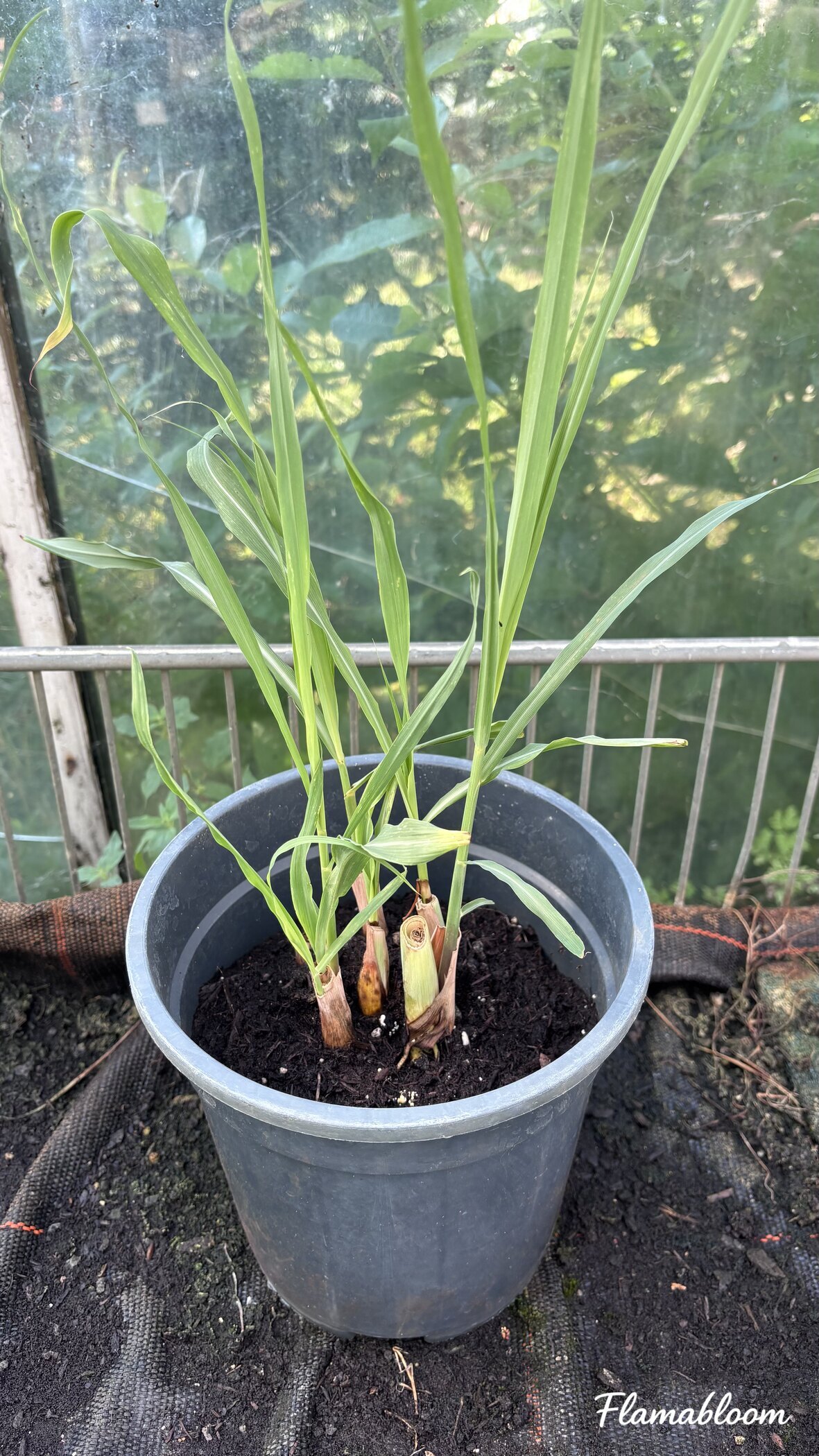
If there is one plant I always recommend to people who are just starting a garden, it is lemongrass.
No need to buy seeds.
No need to buy young plants.
One fresh bunch of lemongrass from the supermarket is enough to begin a clump that can live for many years.
Lemongrass is a very familiar ingredient in Vietnamese cooking. Around the world, it is often known as lemongrass or Cymbopogon citratus. Besides being used in many Asian dishes, it is also brewed as tea, distilled for essential oil, and mentioned in folk medicine. Some sources on lemongrass extracts or essential oil also describe antioxidant, antibacterial, or anti-biofilm activity in research settings.
For me, lemongrass is one of the most worthwhile plants to grow.
Plant it once.
Harvest for years.
Starting with a supermarket stalk
I usually buy fresh lemongrass at Globus or at Asian grocery stores in Germany.
When I bring it home, I use the upper part of the stalks for cooking.
The bases I keep aside.
A base of about 5–7 cm is enough.
That becomes the new starter plant.
Letting the lemongrass root
Place the base in a glass of clean water.
If you want to keep the humidity higher, you can cover the top with a clear plastic bag to create a small greenhouse effect.
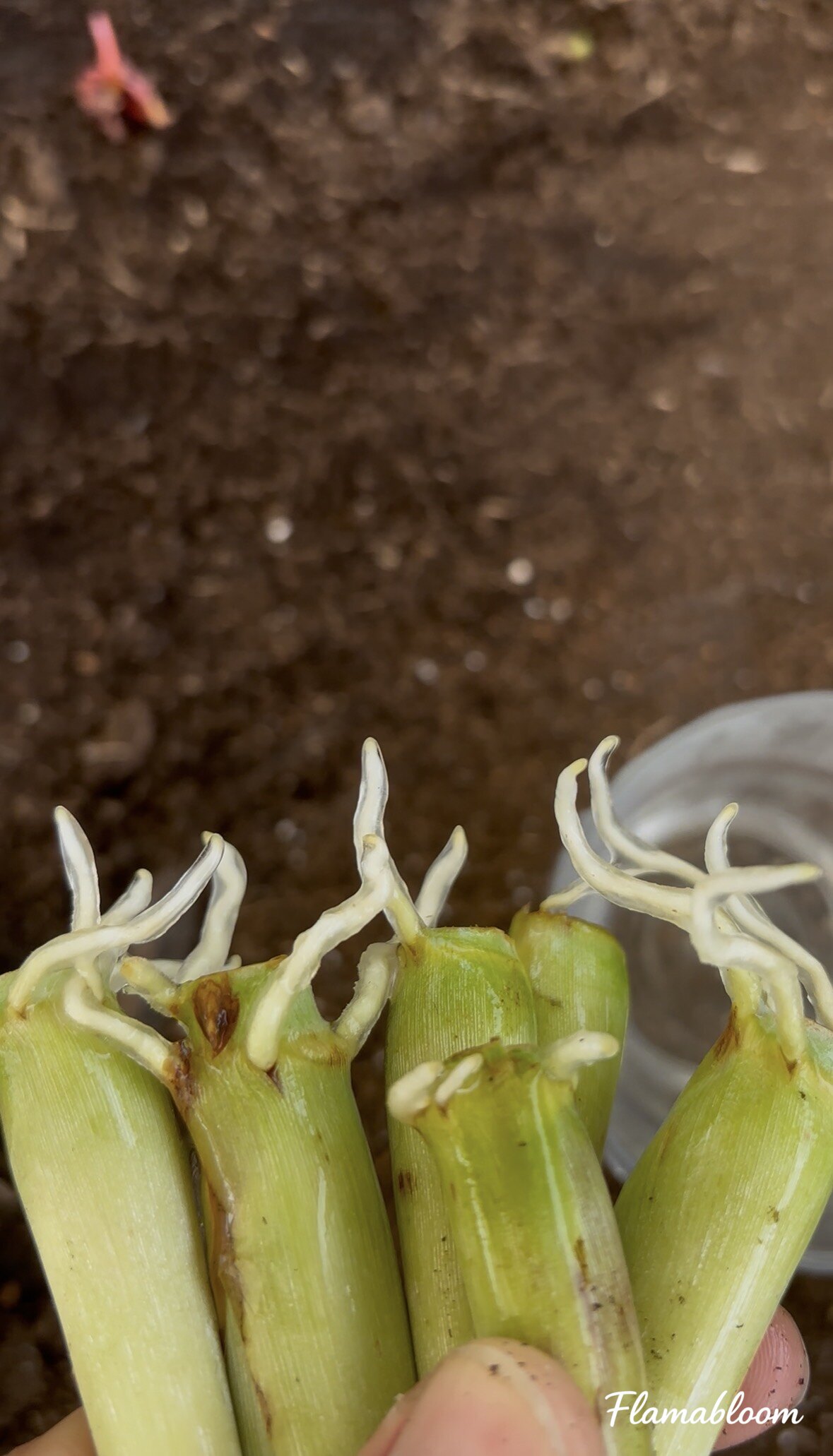
After only 1–2 days, you will usually start seeing tiny white roots appear around the base.
I do not wait until the roots become very long.
As soon as I see the first roots emerging, I plant the pieces in soil.
In my experience, the plant adapts to soil more quickly when it is moved into a pot early.
Planting in a pot
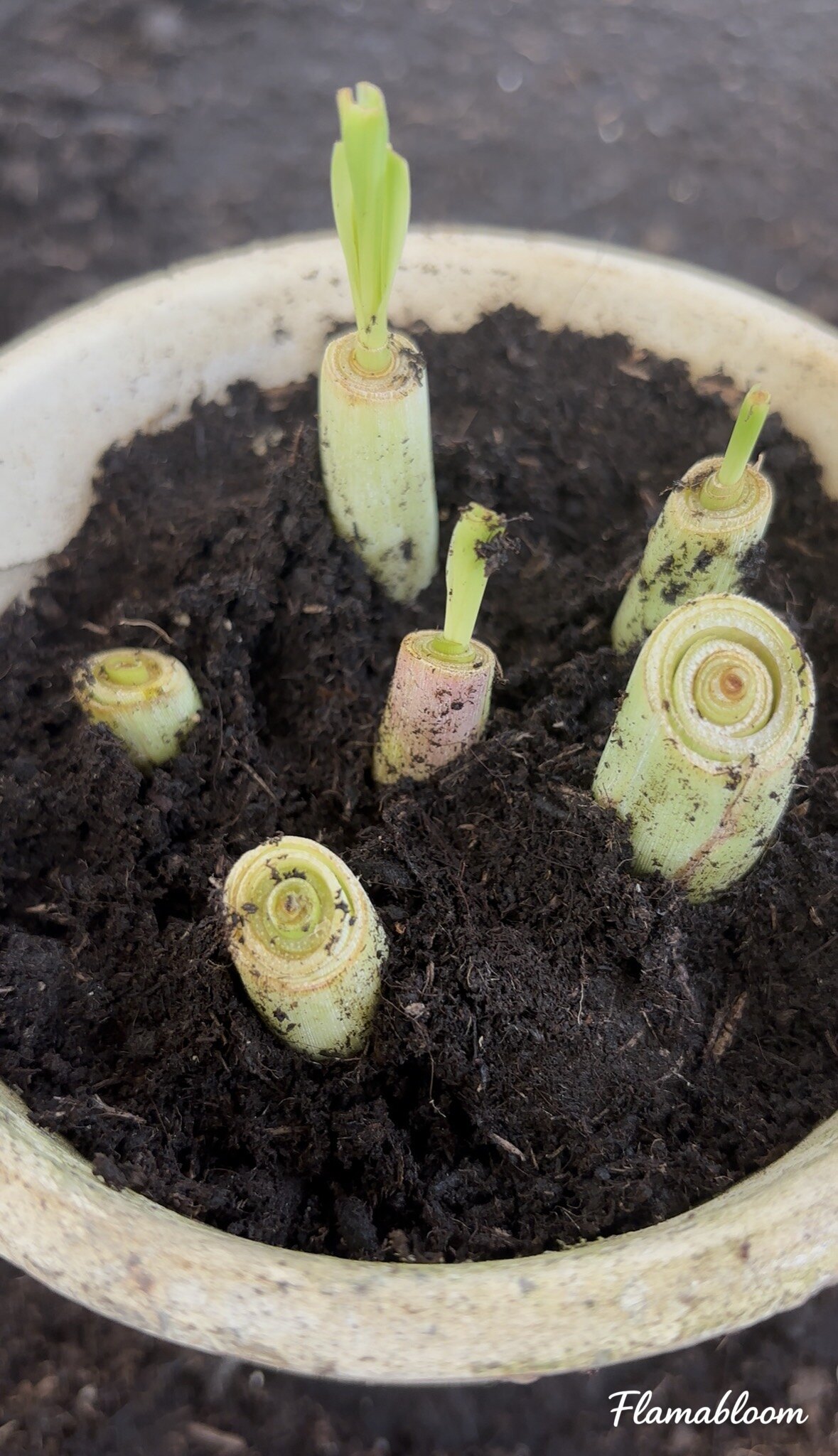
At the beginning, the pot does not need to be very large.
A medium pot is enough for the plant to settle in.
After planting, I water thoroughly so the soil closes around the new roots.
After about 1–2 weeks, when the leaves start growing strongly and the plant stands firmly, I move it into a larger pot.
One thing I have learned after many years is this:
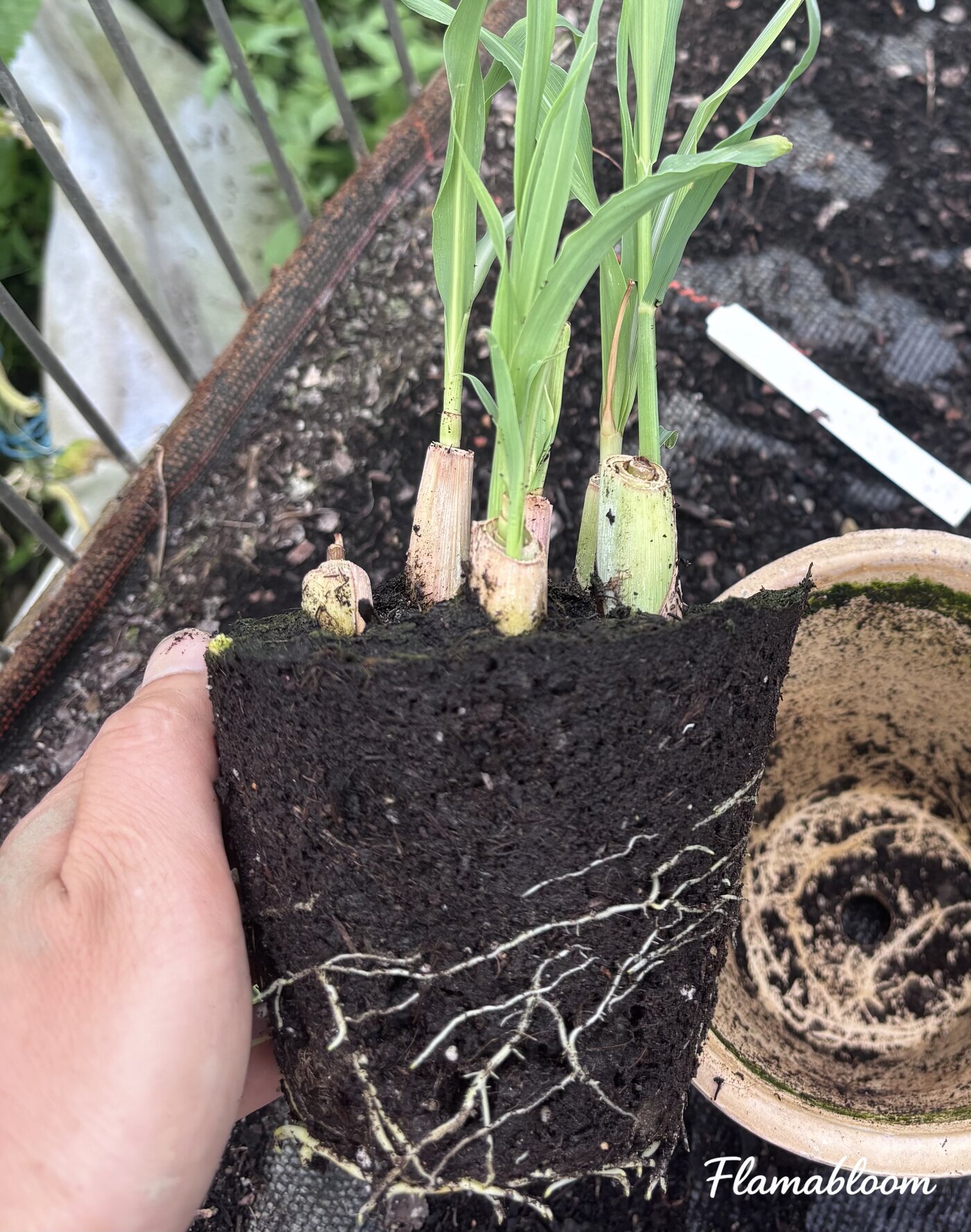
Lemongrass grows very deep roots.
So instead of choosing a wide but shallow pot, I always prefer a deep pot.
A strong root system helps the plant grow faster and produce more stalks.
As the clump grows
After a while, you will see new side shoots coming up from the base.
That is when I move the plant into an even larger pot again.
Lemongrass does not grow as separate little plants.
It grows into one large clump, constantly making new shoots from the base.
The more room the roots have to spread, the healthier the clump becomes, and the more you can harvest.
Harvesting the right way
What I like most about lemongrass is that I do not need to replant it every year.
Whenever I need it for cooking, I cut the upper part of the stalks.
The base and the whole root system stay in the pot.
After that, the plant keeps growing new stalks.
With good care, one lemongrass clump can stay with you for many years.
Winter in Germany
Unlike rau răm, lemongrass does not tolerate frost.
Before the first cold spells arrive, I always bring the whole pot indoors.
A bright window is enough.
During winter, the plant grows very slowly.
I water just enough so the soil does not dry out completely.
Every now and then, I bury a few slow-release nitrogen fertilizer pellets near the base to add nutrients to the soil while the plant is indoors.
When spring and summer return, I take the pot outside again.
This is also a good time to move the plant into a larger pot, add fresh soil, and mix in a little organic fertilizer or vegetable fertilizer.
After only a few weeks, the clump turns green again and starts producing many new shoots.
A lemongrass clump can stay with you for a long time
I have always liked plants that know how to repay the care they receive.
Lemongrass is one of them.
You only need to begin with a base that might otherwise have been thrown away.
A glass of water.
A pot of soil.
And a little patience.
In return, you get a lemongrass clump that can live for years, growing a little bigger each season.
Every time I cut a few stalks and bring them into the kitchen, I feel happy knowing that the rest of the plant is still quietly growing below the soil, preparing for the meals of the next season.