Kinh giới in Germany – Two ways I still grow it every year
My practical notes on growing kinh giới in Germany: starting from seed, rooting stems, timing the season, and caring for young plants in a European climate.
- Author
- FlamaBloom
- Published
- July 15, 2026
- Updated
- July 15, 2026
- Reading time
- 4 min read
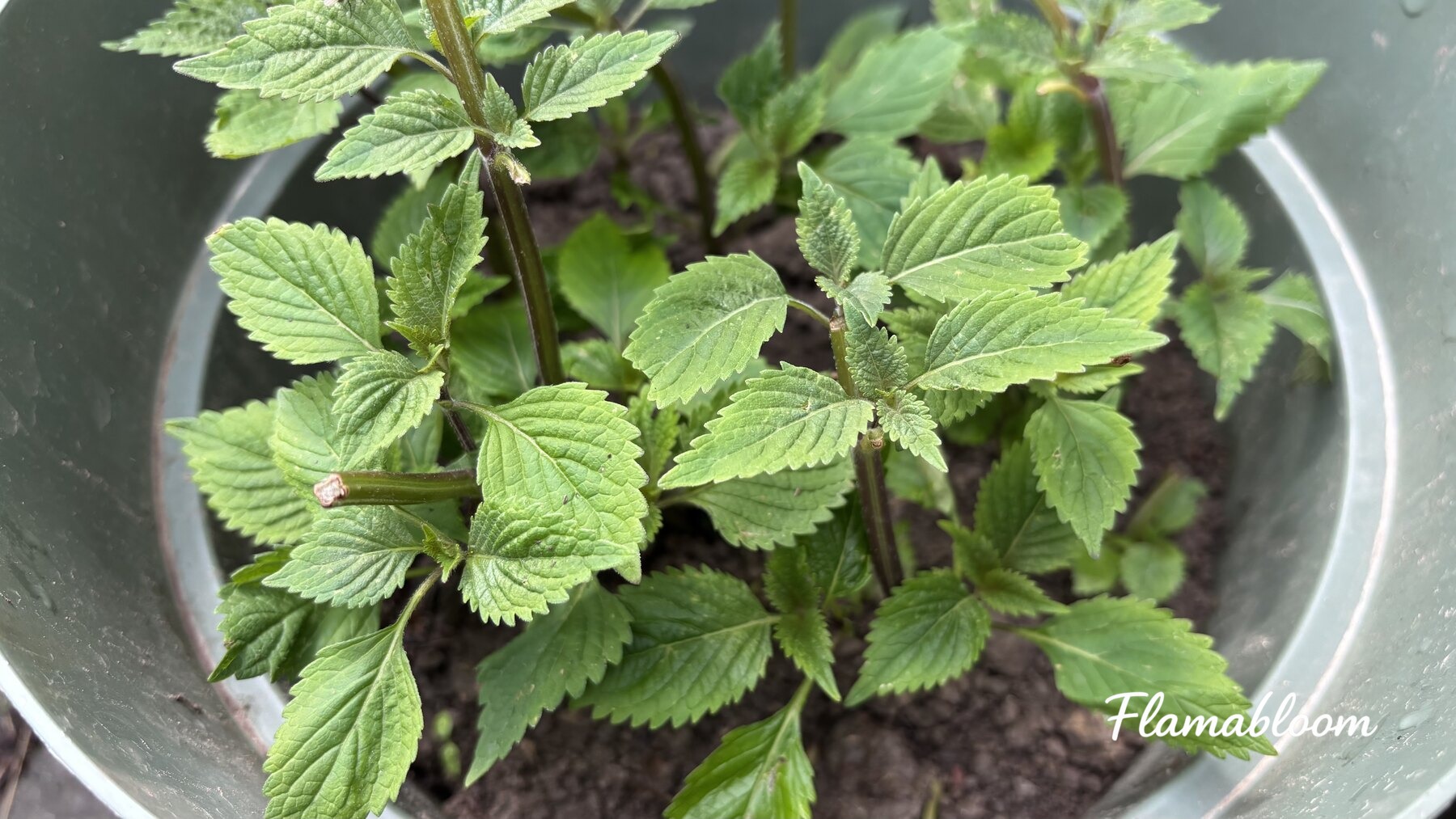
If I had to choose one herb that reminds me most of home, for me it would certainly be kinh giới.
In Vietnam, kinh giới grows easily. In Germany, everything is a little different. Summer is shorter, spring arrives later, and cold nights can slow young plants down after just one evening.
Many people say that if you let the older plants flower and drop their seeds, kinh giới will come back on its own the following year.
I know quite a few people who have succeeded this way.
For me... never.
Maybe my garden does not have the right conditions yet, or maybe I simply have not been lucky. So for many years now, I have still started new plants intentionally at the beginning of each spring.
After about ten years of gardening, these are the two methods I usually use.
Method 1 – Starting from seed
This method takes more time, but it also gives me the strongest and most even plants.
Because summer in Germany is quite short, I usually begin from late March to early April.
Step 1: Soak the seeds
Soak the seeds in water for about 6–8 hours, ideally overnight.
This helps the seeds absorb enough water and germinate more evenly.
Step 2: Prepare the soil
I always use seed-starting soil.
Before sowing, I soak the whole tray or pot in water for about 10 minutes so the soil is fully moist.
That way, after sowing, I do not need to water strongly and risk washing the tiny seeds away.
Step 3: Sow the seeds
Scatter the seeds evenly over the surface.
Then cover them with a very thin layer of soil.
There is no need to cover them too deeply because kinh giới seeds are quite small.
Step 4: Make a mini greenhouse
I like reusing plastic boxes from grapes or fruit bought at the supermarket.
After washing them clean, they become small greenhouses with clear lids.
Closing the lid keeps moisture in very well, and I usually do not need to water again during the first few days.
I place the box near a bright window, but away from harsh direct sun.
Step 5: Wait for the plants to grow
After about 1–2 weeks, the seedlings begin to appear.
Once they have a few true leaves, I move them into a larger tray with regular vegetable soil or flower soil.
It is worth leaving enough space between plants so they can grow stronger later.
Around May, once the risk of frost has passed, I move them out into the garden.
In the beginning, I watch carefully for slugs and snails because they especially like young kinh giới plants.
In truth, just 3–5 plants are enough for fresh herbs through the summer.
Method 2 – Growing from stems
This is a method I really like because it is fast, simple, and has a fairly high success rate.
I only need to buy a very fresh bunch of kinh giới from an Asian market.
At home, I remove all the large leaves to use for cooking.
Then I keep the healthiest stems.
Each stem piece should have about two nodes.
Using a very sharp knife, I cut the base at an angle.
Then I soak the stems in water for about 4–5 hours so they can take up plenty of water.
When planting, I push the base into the soil so that at least one node sits below the soil surface.
Above the soil, I keep the nodes with leaves or small side shoots.
Many people remove all the leaves, but I usually leave a few because the plant still needs leaves for photosynthesis.
The new roots will grow from the node buried in the soil.
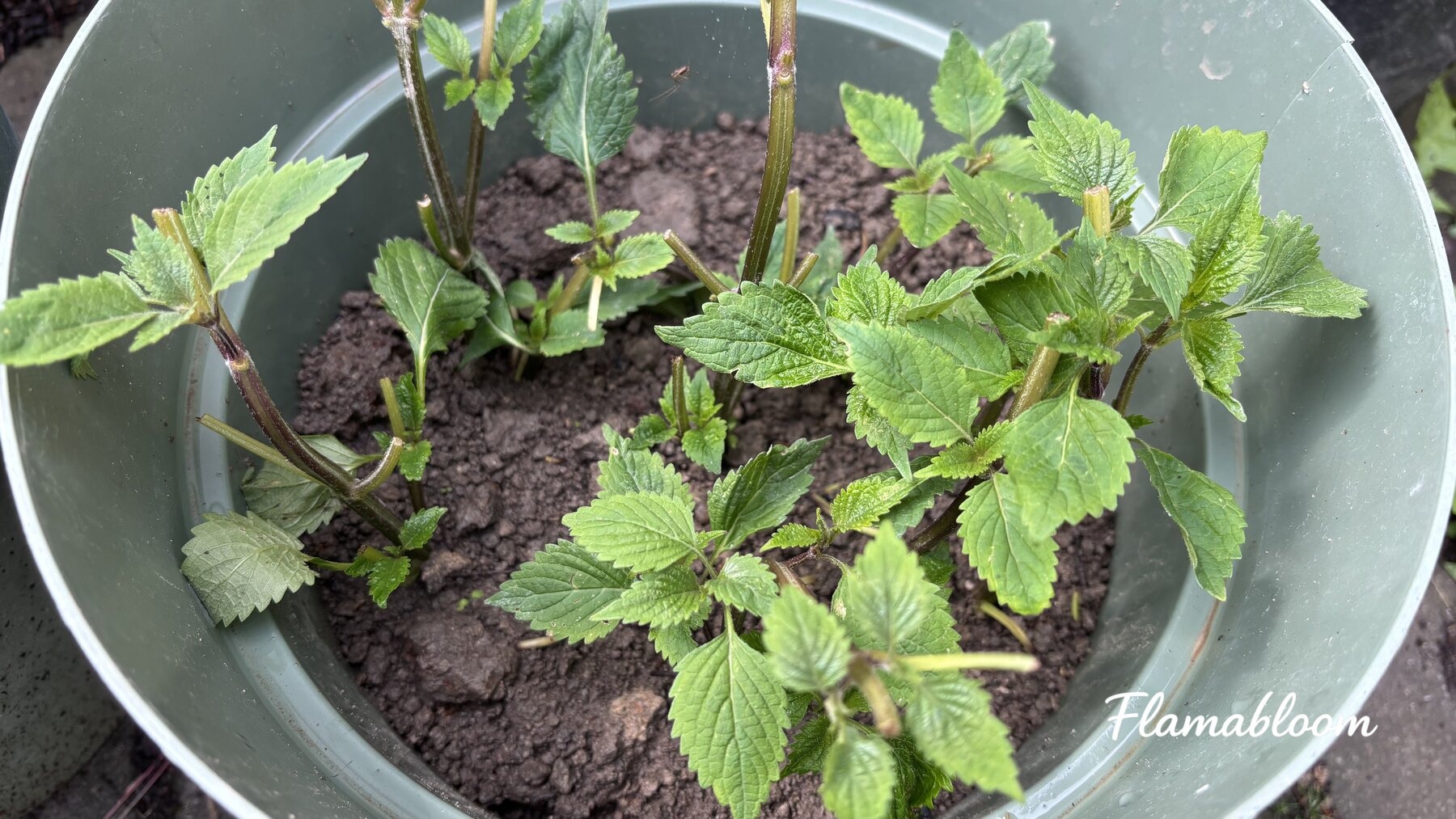
If the weather is kind and the soil stays evenly moist, after only 3–7 days the stems often look fresh again.
That is usually the first sign that new roots have started to form.
Soon after, the plant becomes sturdier and keeps sending out new young leaves.
Which method do I prefer?
If I have plenty of time, I still choose to start from seed.
Watching the first tiny leaves appear always brings a very particular kind of joy.
But if it is already the middle of spring, or if I simply want herbs sooner, I almost always choose stem cuttings.
Less work.
Faster.
And almost every year, it works.
After many years of gardening, I have noticed something I find very interesting.
Some plants are cared for from seed for two whole months.
Some begin as a piece of stem I almost threw away.
In the end, both can become a healthy green bush.
Maybe plants do not care too much about how we begin.
What matters more is whether we have enough patience to give them a little more time.