Growing lá lốt in Germany
How I grow lá lốt in Germany from stems bought at an Asian grocery store, root the cuttings, keep the plant in a pot, and bring it indoors for winter.
- Author
- FlamaBloom
- Published
- July 22, 2026
- Updated
- July 22, 2026
- Reading time
- 5 min read
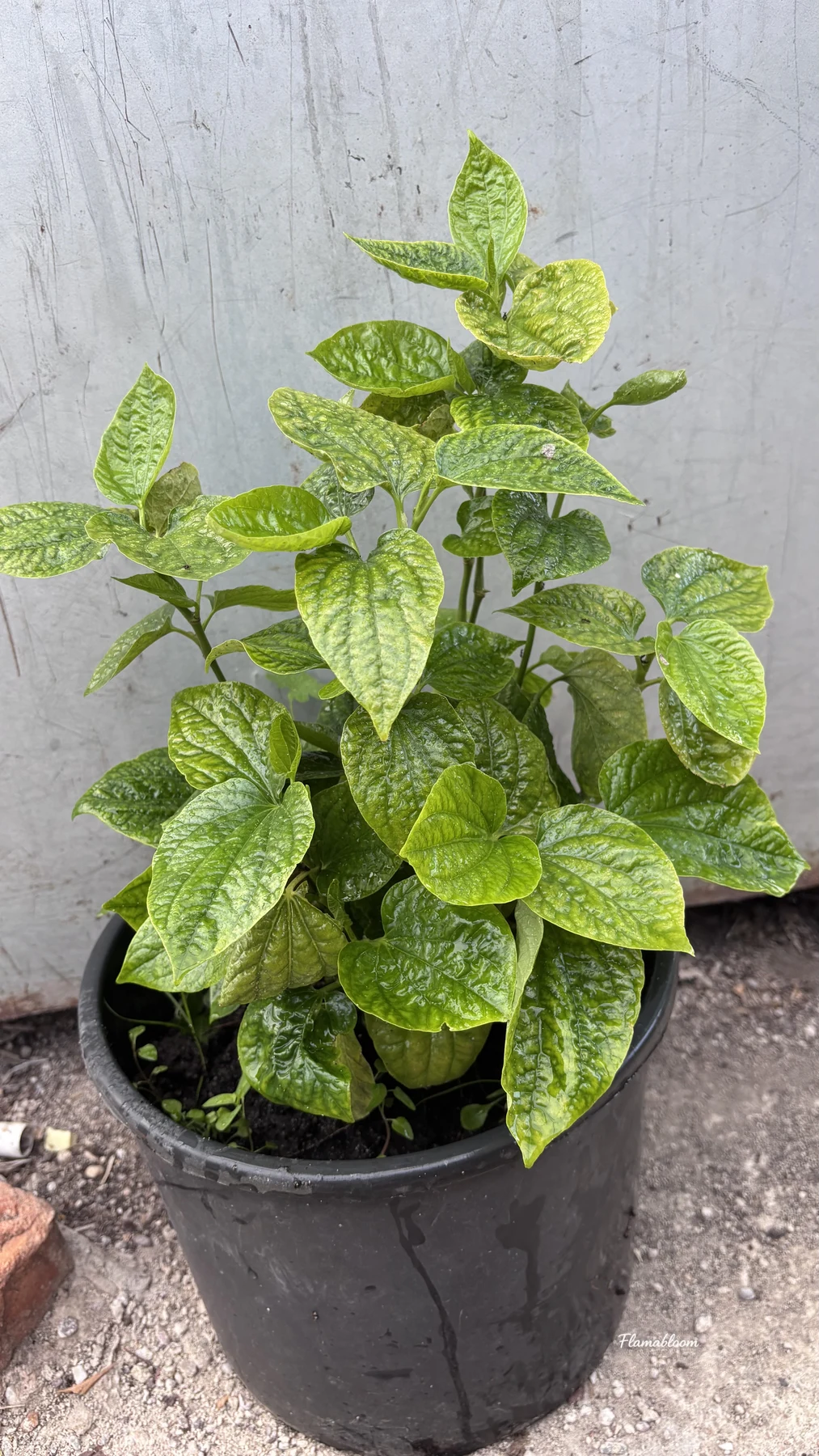
There are vegetables I miss because of their flavor.
There are vegetables I miss because of the dishes they belong to.
And then there is lá lốt, which I miss for both reasons.
In Vietnam, lá lốt is not rare. You can find it at the market easily. Some homes even let it creep along fences, corners of the yard, or under trees.
But after moving to Germany, making bò cuốn lá lốt is no longer so simple.
Whenever I go to an Asian grocery store and find a bunch of lá lốt, it feels a little like meeting an old friend again.
And just like with many other vegetables, my first thought was not:
"I'll just buy it and eat it."
It was:
"Let's take it home and see if it grows."
What is lá lốt?
Lá lốt has the scientific name Piper sarmentosum. In English, it is often called wild betel leaf.
It is a creeping perennial plant and is very easy to propagate.
In Vietnamese cooking, lá lốt is almost the "soul" of many dishes.
Just mentioning it is enough to make me hungry.
- Grilled beef wrapped in lá lốt.
- Chả lá lốt.
- Eaten with hot rice.
- Eaten with noodles and fish sauce.
The particular fragrance of lá lốt is something I have never found in any other herb.
Besides being used as a seasoning leaf, lá lốt is also often mentioned in folk medicine, especially in uses connected with digestion, warming the body, or traditional remedies for aches.
But for me, its greatest use is still this: it makes a meal feel like home.
One bunch and many new plants
Whenever I buy lá lốt at an Asian grocery store, I choose a bunch that still looks fresh.
The large leaves go into the kitchen.
The smaller leaves and stems, I keep.
I place the stems in a glass of clean water for about a day.
After that, if I look closely, I can see the stem nodes beginning to prepare for roots.
That is the best time to plant them.
A small but important trick
I prepare a pot with loose soil.
Then I push the stem into the soil so that at least one node is buried below the surface.
That is where the new roots will grow.
If I plant only a smooth section of stem without a node under the soil, the cutting has a much harder time taking root.
After watering it well, all that is left is to wait patiently for a while.
Then the young leaves appear.
That is always the moment that makes me happiest.
A stem that seemed destined only for yesterday's dinner has started becoming a new plant today.
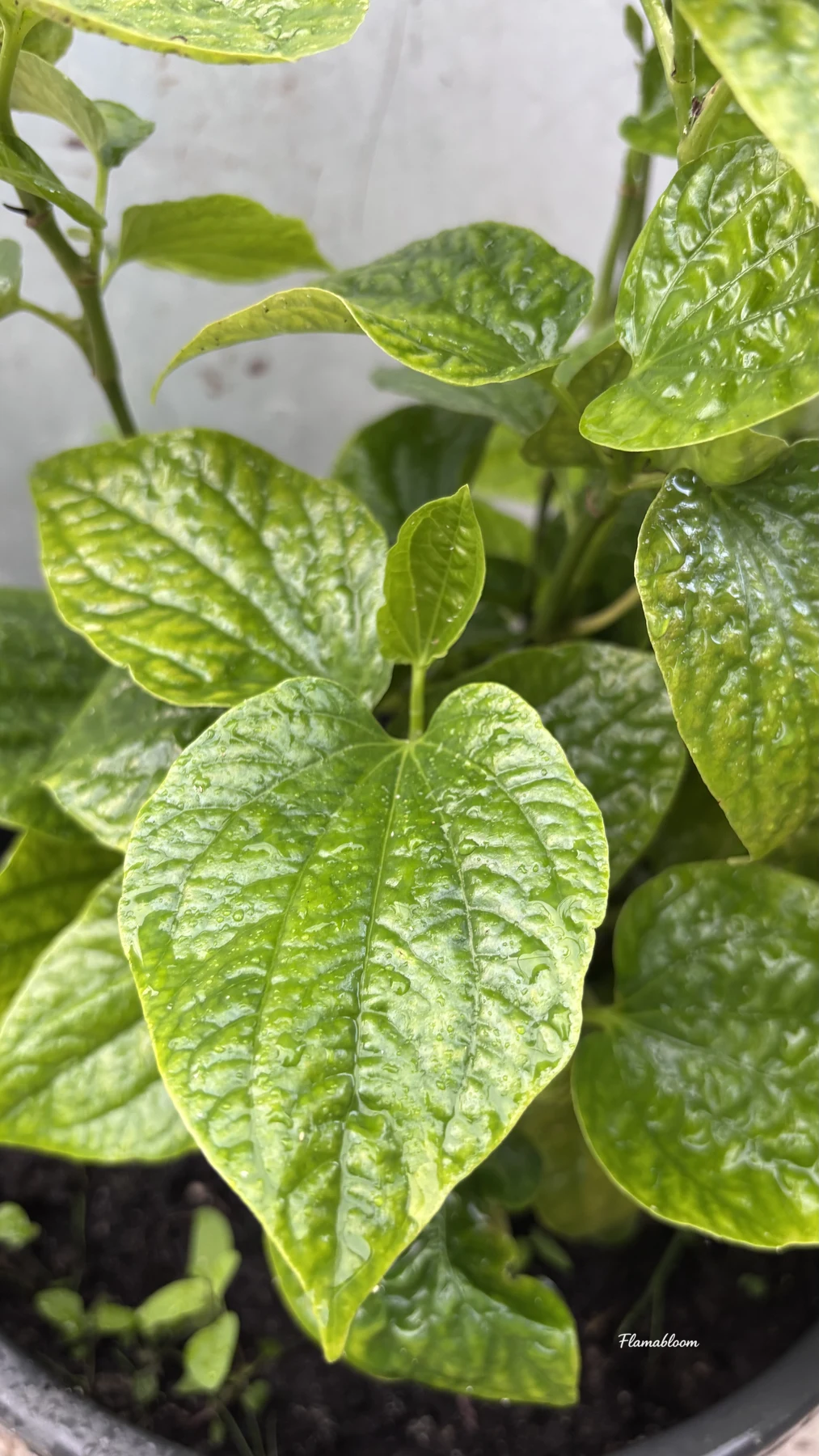
Summer outside, winter indoors
If there is one clear difference between lá lốt and rau cần, it is cold tolerance.
Rau cần can calmly sleep under a layer of ice all winter.
Lá lốt does not enjoy that at all.
When the temperature begins to drop, I bring the whole pot indoors.
No greenhouse needed.
No special room needed.
A bright window is enough for the plant to keep living through winter.
To keep it from running short on nutrients during that time, I usually bury a few slow-release NPK fertilizer pellets in the soil.
It feels a little like preparing some stored food for winter.
Every spring is a small new beginning
When spring arrives, I move the plant into a larger pot.
I also replace the old soil with fresher, richer soil.
After a winter of resting, the plant almost feels "woken up".
Only a few weeks later, new stems begin growing one after another.
The leaves become larger.
Greener.
And more fragrant.
Do not let it stay only on the ground
One thing I really like about lá lốt is that it does not only creep sideways.
If I add a few sticks or make a small frame for it to hold on to, it starts climbing beautifully.
Strong stems can grow to more than one meter long.
At that point, the pot looks more like a miniature green wall than a vegetable pot.
Every time I cut a few leaves for cooking, the plant keeps sending out new stems.
One plant can become many plants
After a while, when the stems have grown longer, I cut them into pieces again.
Each piece only needs to have a few nodes.
Soak in water.
Plant in soil.
And another pot begins.
In this way, from one bunch of lá lốt bought at an Asian grocery store, I have propagated it into several different pots.
No need to buy more plants.
Nature has already prepared everything.
I only help a little.
A fragrance that cannot be replaced
Now, whenever I want to make bò cuốn lá lốt, I only need to take a few steps into the garden.
Pick a handful of leaves.
Rinse them clean.
Then bring them into the kitchen.
Someone who has never lived far from home might find that completely ordinary.
But for me, it always feels special.
In a small garden in Germany, there is still a green pot of lá lốt growing a little more each day.
And every time the fragrance of lá lốt rises from a hot pan, I remember family meals in Vietnam.
Some flavors are not only for eating.
They are for remembering.
And sometimes, growing one small pot of lá lốt in a garden corner is enough to make the thousands of kilometers between Germany and Vietnam feel much closer.