Growing rau cần in Germany
How I regrow rau cần from supermarket stems in Germany, keep it in a water-filled container, and watch it return after winter.
- Author
- FlamaBloom
- Published
- July 22, 2026
- Updated
- July 22, 2026
- Reading time
- 5 min read
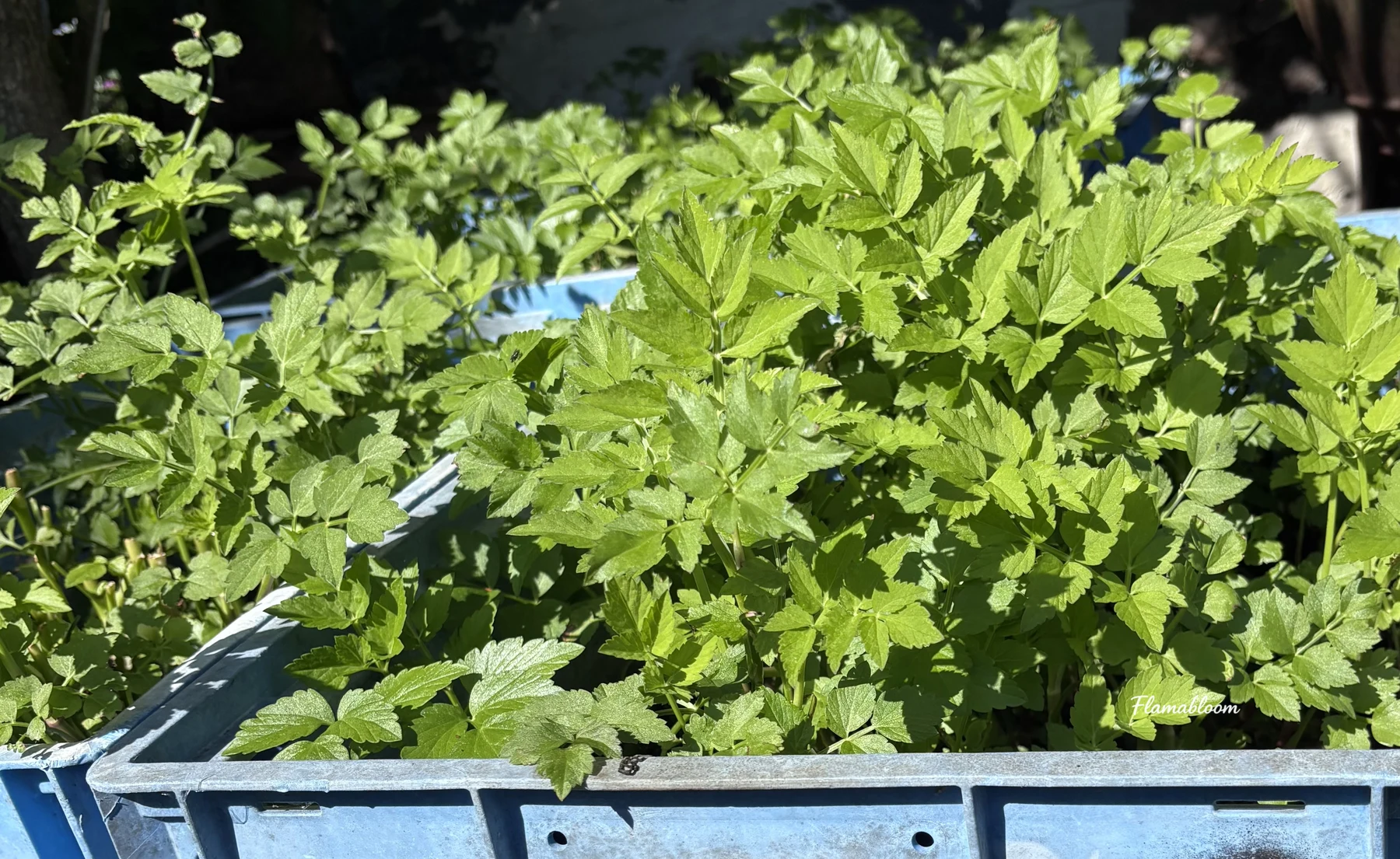
There are foods I barely noticed when I still lived in Vietnam.
Rau cần was one of them.
Back home, it was always at the market. When winter came, fresh green bunches of rau cần sat beside cải cúc and cải ngọt. If we had it, we ate it. If not, that was fine too.
But since living in Germany, everything feels a little different.
There are times when I go to an Asian grocery store and see rau cần being sold there, and I pause for a few seconds. Not because it is rare. Because that smell feels like a small ticket back to my mother's kitchen.
The first time I saw rau cần in the shop, the first thought in my head appeared immediately:
"I wonder... can I grow this?"
And so another small experiment began.
What is rau cần?
The rau cần Vietnamese people commonly eat has the scientific name Oenanthe javanica. In English, it is often called water dropwort or Japanese parsley.
It is a vegetable that grows very well in wet conditions and can even live in shallow water.
In Vietnam, rau cần appears often in winter.
People use it for:
- stir-frying with garlic,
- stir-frying with beef,
- fish soup,
- eating alongside many homestyle dishes.
Besides its distinctive flavor, rau cần is also often mentioned as a vegetable with vitamin A, vitamin C, fiber, and minerals.
But honestly, that is not why I like it most.
I like it because it smells like home.
From one bunch to a small garden
Whenever I buy rau cần from an Asian grocery store, I eat only the tender tops.
The older bases... I have never thrown them away.
I cut and keep about 7-10 cm of the lower stems, then place them in a cup of clean water for about a day.
After a short while, tiny white roots begin to appear from the stem nodes.
That is when I know:
All right, time to be a farmer again.
Rau cần is easy to grow. Finding enough pots is harder.
The special thing about rau cần is that it really likes water.
I choose a large container without drainage holes.
At first, I used soil made for water lilies.
Then I filled the container until the water sat about 7-10 cm above the soil and planted the stems down into it.
Once the plants started rooting and growing new leaves, I kept adding water so the level stayed about 5-7 cm above the soil.
Later, I tried several types of soil.
- Water lily soil.
- Garden compost.
- Ordinary garden soil.
The result surprised me.
Rau cần seemed to look at me and say:
"Use whatever soil you want, as long as you don't let me get thirsty."
And honestly, that was true.
In all of those soils, the plants grew very strongly.
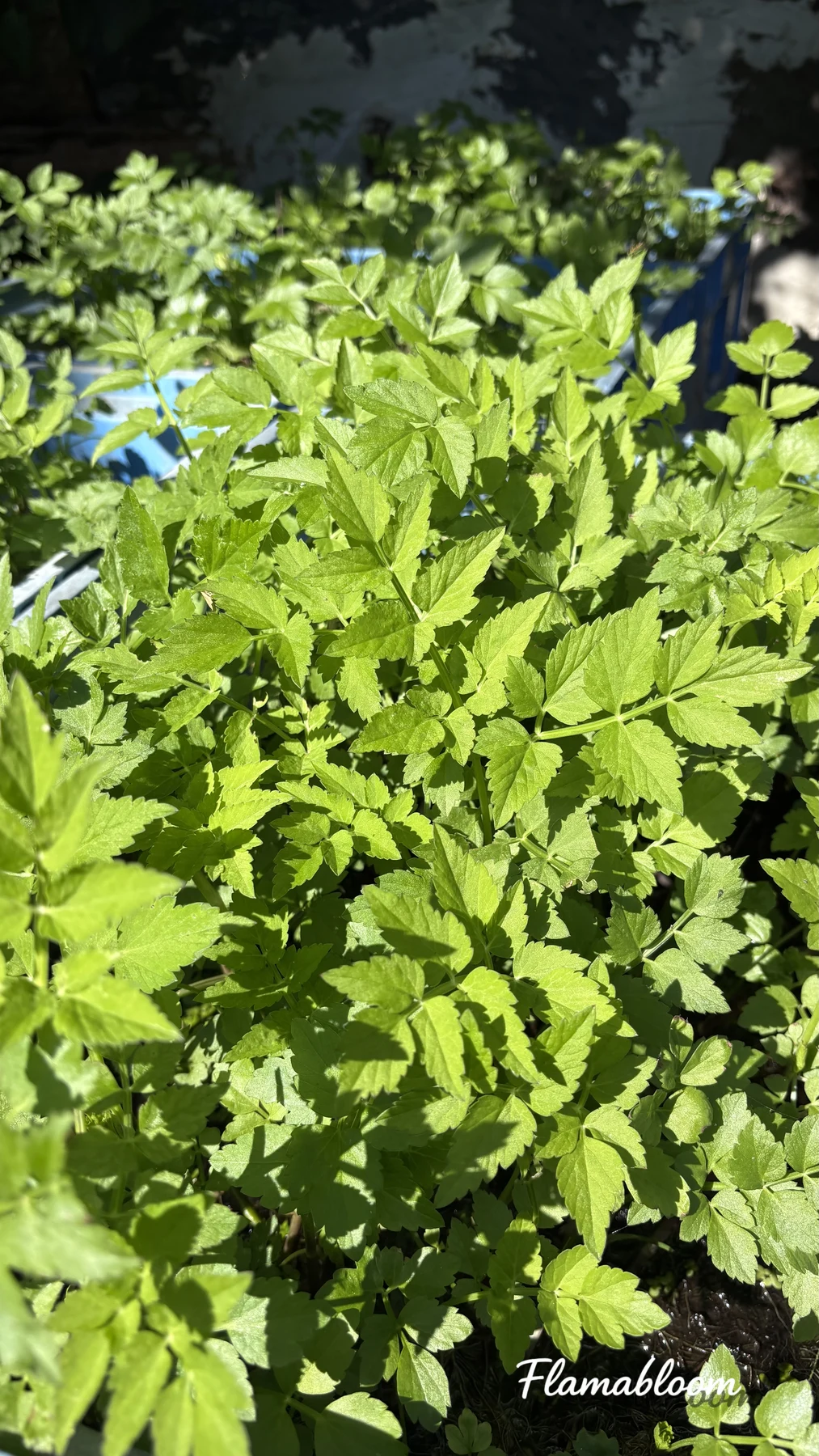
Rau cần multiplies faster than I expected
After a while, many new shoots grow from the base.
At that point, I only need to gently divide the clump, and I already have a new container.
No need to buy more plants.
No need to sow seeds.
No complicated technique.
Just... more containers.
So from one bunch bought at a shop, I slowly had two containers.
Then three.
Now there are four containers of rau cần in the garden.
The thing that surprised me most
When I first planted it, I always thought:
Rau cần is a winter vegetable in Vietnam, so it must handle cold fairly well.
But I never imagined it could handle a German winter.
On days when the temperature dropped to -15°C, sometimes close to -20°C, I still left the containers outside.
When winter arrived, I only poured out some water so it would not be too deep.
Then I stood there watching the whole container freeze into a block of ice.
At that moment, I truly thought:
"Well, I suppose spring will mean buying new rau cần again."
But nature keeps finding ways to surprise me.
When the ice melted, I simply added more water.
A few days later, from under the soil that seemed to have slept through winter, the first green shoots quietly appeared.
No noise.
No announcement.
Just simply: spring had arrived.
By now, those containers of rau cần have gone through 4-5 winters with me.
Still green.
Still strong.
Still returning every year.
A small corner of home
Now, whenever I cook beef stir-fried with rau cần or fish soup, I no longer have to run to the Asian grocery store.
I only need to open the door and step into the garden.
Cut a handful of greens.
Rinse them clean.
Bring them into the kitchen.
The distance from a small garden in Germany to the kitchen of my childhood in Vietnam is still thousands of kilometers.
But sometimes, one familiar scent is enough to make that road feel very short.
Maybe that is what I love most about gardening.
It is not only about harvesting a vegetable.
It is that every plant I grow keeps a little piece of memory.
And every time I cut a handful of rau cần, I bring home back to the family table, in the most ordinary way.